Continuing education
From snapshot to systemic insight
A diagnosis is never “finished,” even if it has been established according to the rules after going through all the logical steps included, for example, in the differential diagnosis strategy. After all, it always remains merely a snapshot of a dynamic process that, by definition, never stands still.
When a patient presents themselves to you, they show an equilibrium that is stable and understandable at that moment. You can name and describe that equilibrium and initiate treatment based on it. Through consultation and treatment, the patient will be brought out of that temporary stable equilibrium and move towards a new equilibrium. You naturally expect this to be in the direction you initiated with your treatment. However, that is not necessarily the case.
Underlying dynamics
The underlying dynamic process that led to a disruption of the patient's homeostatic balance is essential. What movement underlies this? How must we read the patient's body to understand what it is telling us about this?
If you bring a patient out of their temporary stable equilibrium, the underlying dynamic process can regain the upper hand. After all, you cannot simply move a powerful movement in the direction you desire. For instance, it can also switch, even unintentionally due to a treatment you initiated, to another meridian.
As a therapist, you have the responsibility to understand this. You are not treating a diagnosis; you are treating the dynamic processes taking place in or with a patient. And the only correct treatment is guiding the patient towards his own homeostatic equilibrium, in which he can once again process all the challenges life presents to him, within the boundaries of his “own” homeostasis. This guidance can consist of conversations, acupuncture treatments, Chinese herbs, Tuina, Shiatsu, dietary advice, lifestyle guidelines, Tai Chi, Qigong, referral to a Western specialist, etc.
Which guidance is the right one depends on the underlying dynamic process and the possibilities you have as a practitioner to set the movement necessary for the patient in motion.
Key points of the course
From collecting to understanding Most diagnostic training stops at naming a pattern. Yan's course starts there — and goes further. Chinese medicine is a systems theory: it is not about the individual symptoms, but about understanding the relationships between the symptoms! These relationships form clusters. And clusters are not fixed categories; they are dynamic connections that respond to treatment, stress, hormones, age, living environment, and season. Bridge symptoms as a signal
Bridge symptoms are new symptoms that appear at the edge of an existing cluster, without fitting well with it. That is no coincidence. That is a warning—a signal that the balance is shifting and that the cluster is about to tip into a next pattern. Those who recognize this can predict what is to come.
Formulating a prognosis As a therapist, you can formulate a prognosis based on bridge symptoms and prepare the patient for it. This gives you peace of mind, gives the patient confidence, and transforms an unexpected change into an expected moment.
Treating and preventing You learn how to simultaneously treat the acute complaint and stabilize the system, so that the cluster does not unintentionally spill over into a next pattern. The treatment of bridge symptoms is the central instrument in this.
An example: Autoimmune diseases
In autoimmune pathology, there are three groups of hormones—stress hormones, sleep hormones, and sex hormones—that influence the immune system. Western medicine treats by organ and by specialist. There is a high probability that a patient is sent from the pulmonologist to the rheumatologist to the dermatologist, only to end up back with the pulmonologist.
There is a reason for this. Yan shows what is going on inside the system. And more than that: he explains how you can get the patient out of that system with adequate treatment!
Benefits for you as a participant
After completing this course, you will possess an extra diagnostic layer that does not replace your existing TCM knowledge but enriches it. You will be able not only to name patterns but also to predict how they will develop. You will no longer be surprised when a patient returns different than expected — because you saw it coming. And if things turn out differently than anticipated, you will know that there is something you have not yet seen: a learning moment, not a failure.
Moreover, you will learn a language for something you likely already do intuitively but have not yet been able to name. This gives you more confidence in conversations with patients, more calm during treatment, and a better grasp of complex cases.
This course stands alongside Maciocia and classical TCM diagnostics — not as a replacement for them. It is an additional perspective, an additional tool.
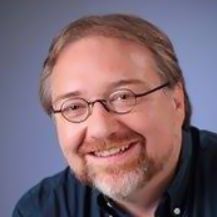 Yan Schroën