Continuing education
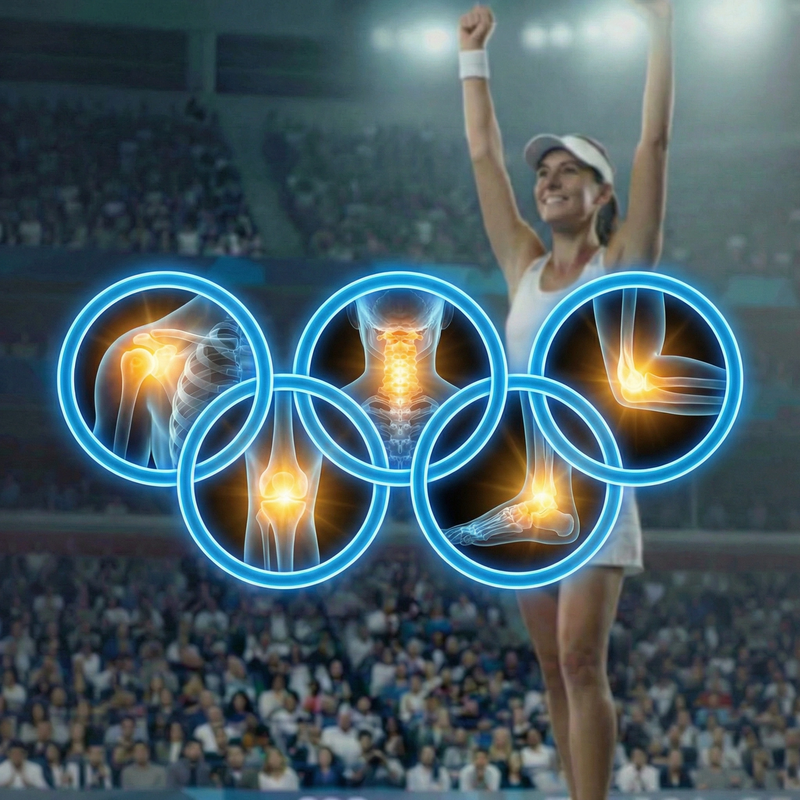
Although it's named Sports Medicine Acupuncture, do not let the word “Sports” limit your clinical vision. The true power of SMAC lies in its universal application to human biomechanics. From the adolescent struggling with growth-related imbalances to the elderly patient using exercise to maintain mental and physical vitality, SMA provides the structural and constitutional balancing required to keep the entire population moving pain-free. By integrating TCM with modern orthopedics, you become a specialist capable of optimizing the health of any patient, regardless of their athletic status.
The Market Opportunity: From Popular Sports Pitch to General Public
The demand for specialized orthopedic care is surging across all demographics in Europe. As a SMAC therapist, you are uniquely equipped to handle the high volume of injuries and chronic dysfunctions coming from:
The global sports medicine market is projected to reach €14.3 billion by 2033. For the physiotherapist-acupuncturist, this isn't just a clinical upgrade; it's a strategic entry into a high-value market where patients are increasingly seeking non-pharmaceutical solutions to restore their quality of life.
Program description
The Sports Medicine Acupuncture Certification (SMAC) program significantly expands upon the fundamental Traditional Chinese Medicine (TCM) assessment and treatment approaches for orthopedic and musculoskeletal conditions. TCM is far from an antiquated medical system but instead imbued with powerful tools of differential diagnosis and acupuncture and moxibustion (zhenjiu) treatment techniques.
This program does not stack TCM modalities and Western biomedical facts side-by-side with the intention of combining these two paradigms. Rather, it applies TCM principles to Western biomedical facts and uses Western biomedical facts to illustrate TCM principles, thereby truly integrating the salient principles of both medical practices. As a result, the assessment and treatment strategies learned in this program will bring long-lasting and successful outcomes.
Participants in the SMAC program will develop the skills and competencies necessary to:
Choose Your Professional Path
We offer two distinct ways to engage with this material, depending on your clinical goals and available time.
Path 1: The 15-Day In-Person Clinical Intensive (Non-Certification)
Designed for practitioners who want to immediately elevate their "on-the-table" results without committing to a full certification. These Assessment and Treatment of Injury (ATI) courses bridge the gap between functional anatomy and real-world clinical application
Path 2: Full C.SMA Certification (The Professional Elite)
For those aiming for mastery, this track involves over 250 hours of advanced training. To earn the C.SMA distinction, you must complete the 15-day in-person intensive PLUS the required webinar series, pass four online exams, and a final practical exam.
There is a practical reason why the webinars come first: Ian weaves their content directly into his clinical teaching. Arriving at the in-person course having studied the anatomy, cadaver work, and channel sinew theory means every needle technique you learn lands in a fully prepared mind. The webinars are not a formality — they are the foundation.
Required Certification Webinars:
These recorded sessions bridge the gap between theory and hands-on practice, including essential cadaver dissection and anatomy palpation.
• Anatomy Palpation/Cadaver (APC) & Postural Assessment (PACE) — 32.75 hrs • Motor Point Needling Protocols (included with this purchase)
• APC, Channel Sinews (ATS), & PACE — 40.5 hrs • Motor Point Needling Protocols (included with this purchase)
• APC, Channel Sinews (ATS), & PACE — 31.0 hrs • Motor Point Needling Protocols (included with this purchase)
• APC, Channel Sinews (ATS), & Assessment of Injury (ATI) — 27 hrs • Motor Point Needling Protocols (included with this purchase)
Please note:
Certification candidates are required to purchase the online webinar modules separately via Acupuncture World/Net of Knowledge. The estimated costs will be around €4610. For further information click LINK.
SMAC Certificate Benefits
The C.SMA practitioner who completes the Sports Medicine Acupuncture Certification (SMAC) Program receives:
Clinical Insight: Why SMAC Works
A hallmark of this program is innovative needle techniques and point combinations in addition to use Manual Muscle Testing as empirical evidence. Imagine a patient with sacroiliac joint pain: you can demonstrate a weakened glute medius, apply targeted acupuncture to the motor point, and immediately re-test to show the patient the muscle "locking back on."
Furthermore, you will learn to treat "neurologically linked" muscles. For example, a liver disharmony may manifest as supraspinatus tendinopathy in the shoulder. By needling the adductor longus on the opposite hip (connected via the Liver channel), you can often resolve shoulder pain more effectively than by treating the shoulder alone.
Admission Criteria (SMAC Certification)
To ensure the high clinical standards and global recognition of the Sports Medicine Acupuncture Certification (SMAC), the following admission requirements apply to European participants. These requirements are equivalent to the United States standards and are focused on professional excellence and patient safety.
A Career-Defining Investment to Becoming a Much Sought-After Specialist
For the European practitioner, SMAC offers a no-nonsense path to clinical results that standard protocols simply cannot match. Whether you choose the flexibility of the 15-day intensive or the professional prestige of the full C.SMA certification, you are acquiring tools respected by professional sports teams and integrated clinics worldwide.
This is your opportunity to move beyond general practice and become the premier specialist for complex musculoskeletal recovery.
 Ian Armstrong