Continuing education
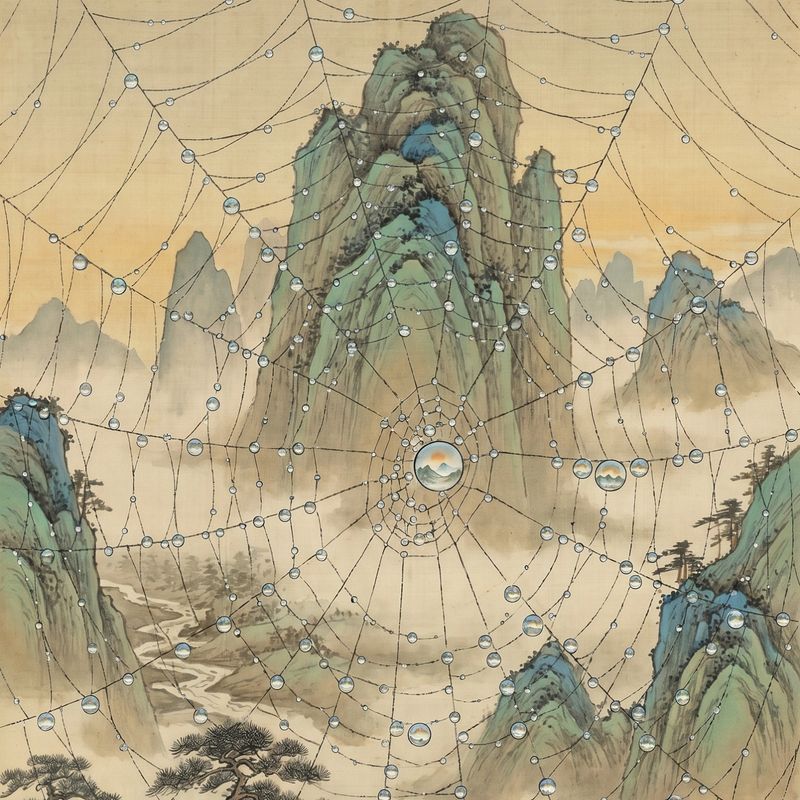
You already know a lot. But do you also think in systems?
As a TCM physician, you have learned to think in Qi, in transformations, in the interaction between Heaven and Earth. But how does that way of thinking relate to the reality described by modern science — quantum fields, emergence, fractal patterns, supersystems? Why do these two worldviews so surprisingly often do the same thing, while barely speaking each other's language?
That is precisely the core of this 6-day course. You will receive a fundamentally new framework that allows you to see the core of both worldviews. It begins in 600 BC — with Anaximander in Greece and Lao Zi in China — and ends with the question that every seasoned clinician asks sooner or later: what am I actually treating?
Difference in thinking
Western medicine and Chinese medicine view reality differently. The former analyzes: it breaks down into parts — cells, organs, biochemical substances. The latter observes relationships: networks, patterns, interactions.
For a long time, they seemed like two incompatible worlds. Systems biology over the past fifty years has slowly blurred that dividing line. Prof. Reiner Straub (Professor at the University of Regensburg) calls this *Vernetztes Denken*: a way of thinking that bridges the gap between both traditions and makes chronic conditions more accessible to those accustomed to linear reasoning.
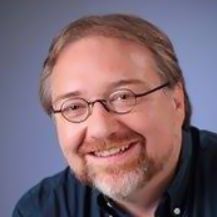
Yan Schroën developed this course series based on a deep study of classical Chinese texts as well as Western history of science and modern quantum physics. He studied not only the Huainanzi and the Qi Jing Ba Mai, but also the work of Reiner Straub on the three great supersystems of the human body. He compares paradigms not because it is intellectually interesting, but because he believes — and demonstrates — that it sharpens your clinical vision.
Key points of the course
Paradigm comparison as a method From Anaximander and Lao Zi, via Newton and Descartes, to Bohr’s quantum revolution — learn how Western and Eastern thought traditions have developed, where they diverge, and where they converge again. At the same time, you explore what 'holism' truly means: how organs relate to tissues and cells and form a whole, rather than being separate parts of the human body.
From nature to body Chinese medicine has never made a distinction between man and the nature in which he lives. What applies in nature—seasons, cycles, the interplay between opposing forces—also applies in the body. In this course, you follow that movement from macro to micro: from biological systems in nature, to the systemic structure of organisms, to the human body as a self-organizing whole.
Quantum fields and classical Chinese texts The organization of quantum fields with frequencies is compared to descriptions by Wuji and passages from the Huainanzi regarding space and time. These turn out to be texts that could have come straight from quantum mechanics.
The three supersystems Reiner Straub's work on the mutual communication between the neurological, immunological, and endocrine systems aligns perfectly with the Chinese concept of Qi as an information carrier. From this perspective, a persistent clinical question also becomes clearer: why does Western medicine work so effectively for acute conditions, yet so often fall short for complex chronic diseases such as rheumatoid arthritis or diabetes mellitus? Systemic thinking offers an answer here that advances both medical approaches.
Miracle Meridians and Fascia The lines of organization in the body are already present before cells materialize. How an embryo knows how to develop, how cells know where to organize themselves—this question has long occupied Western biology. The Qi Jing Ba Mai describe these lines with an accuracy that corresponds to what we now know as the fascia. Life organizes itself along fixed patterns, long before it becomes visible.
Biorhythms as the language of the body The body speaks in rhythms. Day and night, seasons, hormonal cycles, the wave motion of the immune system — all these rhythms are expressions of the same underlying dynamics. Chinese medicine has described them for centuries in terms of Qi movement and organ clocks. Modern systems biology describes the same rhythms in terms of oscillating networks. Those who know both languages read the body more accurately.
Fractals as a structural principle From atomic to molecular, to cellular, to organs, to the entire organism: each layer has unique, emergent properties that generate new properties in the next layer. This fractal structure continues through time — in the biorhythms that organize the body and that have been described in Chinese medicine for centuries. You will learn to recognize the fractal structure of “life.”
Benefits for you as a participant
Systemic thinking is contagious. Once you understand it, you see it everywhere: in the way a patient responds, in the patterns that repeat themselves in a course of treatment, in the conversations you have with colleagues outside of TCM. It is not an abstract theory that ceases as soon as you leave the consulting room. It continues to work.
That continued work begins with you. The philosophical foundations of your profession become clearer, and with that clarity comes the calm of someone who knows why he does what he does. Patients who react differently than expected become readable in a way they were not before. You recognize the organizational layers on which you work, and you see how deep those layers go. From fascia and extraordinary meridians to the communication between the neurological, immunological, and endocrine systems.
You also notice a shift in conversations with colleagues from conventional healthcare. You speak with the same matter-of-factness about Qi and quantum fields as they do about receptors and signaling molecules — because you know they are trying to describe the same thing. This not only gives weight to your words but also makes your choices clear to those working with different systems of thought.
After this series, you approach your patients from a place of deeper insight. That insight does not come solely from what you have learned — it comes from layers within yourself that you have learned to access.
 Yan Schroën